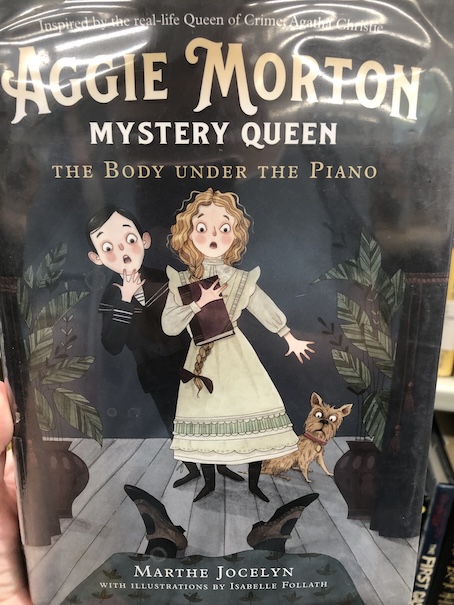
The Body Under the Piano

Aggie Morton, Mystery Queen

The Body Under the Piano by Marthe Jocelyn, 2020.

Aggie Morton is a twelve-year-old girl living in Torquay, England in the early 1900s. Aggie is painfully shy, but she loves writing and has a fascination for the macabre. She loves reading Sherlock Holmes stories, and she likes to write poetry and imagine her own macabre stories. However, Aggie is painfully shy and has difficulty sharing her writing with others and making friends with children her own age. Although her elder sister was educated at boarding schools, her mother decided to educate Aggie at home, so she is accustomed to studying with just her parents and not to a school environment with other children. She does take dance lessons with other girls, but she never seems to know what to talk to them about. Her life has recently changed because her father has died, her family doesn’t have as much money as they did before, and her older sister has married and left home. She is coping with all of this when a series of strange events changes her life even further.

One day, she makes an unusual new friend, a Belgian boy named Hector Perot. Hector is a refugee who has arrived in Torquay without his parents and is living with the local vicar. Aggie meets him in the candy shop near the place where she takes her dance lessons, and as she soon discovers, Hector shares her fascination for mystery and the macabre.

The girls in Aggie’s dance class give a special performance to welcome the newly-arrived Belgian refugees. Aggie is supposed to give a reading of a poem that she wrote for the occasion, but she is overcome with stage fright. The niece of her dance instructor reads the poem aloud for her, leaving Aggie’s notebook on the piano after the performance.

When the girls return the next day for their usual dance lesson, the dance instructor’s sister-in-law, who is known as a disagreeable woman, is dead and lying underneath the piano. Aggie snatches her notebook off the piano before she is hustled away from the dreadful scene and into the nearby candy shop. There, she once again meets Hector, and she tells Hector and the owner of the candy shop all about the murder. 

As the first person on the scene because she just happened to be the first person through the door, Aggie is interviewed by the police and by a very strange local reporter about what she saw. Although finding a dead body is somewhat distressing, because of her fascination for mystery, Aggie is far less distressed than her mother is. Although she usually struggles to get a word out when talking to strangers, she suddenly finds herself with plenty to say to people and lots of questions to ask. To her surprise, her usual shyness doesn’t seem to affect her so much when she’s asking other people questions.

Together, Aggie and Hector ponder who could have wanted this woman dead and who could have killed her in the manner that she was killed. She apparently died by some kind of poison. Her daughter, Rose, the nice girl who read Aggie’s poem for her, would inherit from her mother, and money might be a reason for murder. Then again, perhaps Rose’s aunt, the dance instructor, might have had a reason for wanting her sister-in-law dead. 

Then, Aggie discovers that someone has concealed a message for someone else inside the notebook with her poem. The message implies that someone had an unknown sibling and that an inheritance might be involved. Who wrote that message and who was it meant for? Aggie discovers that the killer may be closer to her own home than she thinks, and she herself could be another victim if she isn’t careful.

My Reaction

I really enjoyed this book because I’m a lifelong Agatha Christie fan! Aggie is loosely based on real life mystery author, Agatha Christie, who also grew up in Torquay during the late 1800s and early 1900s. The circumstances of Aggie’s family are similar to that of the real-life Agatha Christie. Hector is based on Agatha Christie’s detective character, Hercule Poirot. Hector is a refugee from Belgium who arrived without his parents and is staying with the local vicar in Torquay. In real life, Agatha Christie based Hercule Poirot on Belgian refugees who came to England during the First World War, in the 1910s. The reasons why Hector is a refugee aren’t entirely defined in the book series because it is set pre-WWI, but if the series was set in WWI, either Aggie would have to be either younger than the real-life Agatha Christie was at the same time or would have to be a young adult instead of a child.

I enjoyed seeing Aggie as a character. In the beginning, she is very shy and has lived a very sheltered life, but she discovers that she can handle death and mysteries better than anyone would have expected. Although she doesn’t completely lose her shyness, her investigations and her friendship with Hector help to draw her out of her shell and fuel her writer’s imagination. I look forward to seeing how she develops through the rest of the series!

I wouldn’t recommend this mystery for very young readers because of the nature of the murder and because the mystery also involves the identity of an illegitimate child. Probably, readers in their tweens or early teens would be old enough to understand. There are also descriptions of a dead body and a dead rabbit that may bother some readers.

Greenglass House

Greenglass House by Kate Milford, 2014.

Milo Pine lives with his adoptive parents in the inn they run, a strange, rambling mansion called Greenglass House. Their inn is mainly a smugglers’ inn, one that caters to smugglers as well as normal travelers and sailors. The area where they live sees a lot of smugglers, and the Pines are often paid in random smuggled goods.

Milo is looking forward to the Christmas holidays, when their inn is usually empty. However, this year, an unexpected series of guests arrive shortly before Christmas. Milo is never happy when things don’t go according to plan. It makes him feel out-of-control and panicky, and he was really looking forward to having a relaxing vacation.

The unexpected guests are a motley crew, who all seem unsure exactly how long they plan to be staying.

  • Mr. Vinge – A boring-looking old man with oddly colorful socks.
  • Georgie – A young woman with blue hair, who is making a pinhole camera out of an old cigar box. She loans an incredible book of stories to Milo.
  • Dr. Gowervine – He smokes a pipe and argues constantly with Mrs. Hereward.
  • Mrs. Hereward – A fussy woman with mauve luggage.
  • Clem – An unusually athletic woman with red hair, who may be a cat burglar.

With all of these unexpected guests, Mrs. Pine calls the inn’s chef, Mrs. Caraway, to come back and cook for them. Mrs. Caraway also brings her two daughters with her: Lizzie, who owns a bakery and also sometimes helps at the inn, and Meddy, the younger daughter, who is into role-playing games.

Milo never likes it when people ask him about being adopted or point out that he looks nothing like his parents. He loves his adoptive parents and thinks of them as being his parents, but he is sensitive that it’s obvious at a glance, even to total strangers, that they’re not his birth parents. Milo is obviously of Chinese descent, and Mr. and Mrs. Pine aren’t. Meddy rubs Milo the wrong way when they first meet by asking him about his adoption and where he came from. He tells her that he’s always lived in this town and that his adoption is none of her business. He doesn’t want to have to tell her, or anyone, that he was a foundling (an abandoned baby). The Pines adopted him as a baby, and he knows nothing about his birth parents. Privately, he has sometimes imagined what his birth parents might have been like or what his life might have been like if he had been adopted by a different family, but he doesn’t like to say so because imaginings like this seem disloyal to the only parents he’s ever known, and he really does love them.

Then, Milo finds a strange map in a blue leather wallet. He has no idea who it belongs to, but it looks like a nautical map. It doesn’t look like the nearby bay or river, but it does have the different shades of blue that are supposed to indicate the depth of water. When a strange sound wakes Meddy early in the morning, she comes to talk to Milo sees the map, recognizing it as an old navigation chart. Meddy is bored because they’re snowed-in at the inn, and she proposes that she and Milo try to figure out which of the guests lost this strange map and what the map is supposed to show. Meddy turns it into one of her role-playing games, getting Milo to design a character as his alter-ego, so they can act the parts.

At first, Milo doesn’t understand quite how the role-playing game is supposed to work, and Meddy has to explain to him how to imagine himself as the kind of character he wants to be. Milo imagines his alter-ego as someone who is always in control, even when unexpected things happen. He imagines himself as athletic and that he has the ability to sense things about the house. Meddy uses Milo’s imaginings to help him build a rogue-like character. Milo knows that this character isn’t the same as himself, but it’s the kind of character he’s always wanted to be, someone self-confident, with unique abilities.

As they begin to investigate the map and the mysterious guests staying at the inn, Milo finds himself thinking in the way his character would think. He also begins to discover that he has some of the abilities that he’s given his character, unique skills and knowledge that he’s never fully appreciated before.

He notices right away that someone has been in his room while he was away, recognizing small changes that have taken place there. Someone has removed the map from the leather wallet and substituted a blank piece of paper in its place! When Milo and Meddy discuss it, they realize that it probably wasn’t the original owner of the map who took it. The rightful owner would probably have taken the wallet as well as the map, and they wouldn’t have needed to resort to a trick to fool people into thinking that the map was still there when it wasn’t. This suggests to Milo that at least two people are involved with the map – the one who lost it and the one who stole it from Milo. More and more, Milo begins to think that the eclectic group of strangers who have descended upon the inn this Christmas might be more involved with each other than they first appear. They might have all come to the inn at the same time for the same purpose, finding whatever the map leads to. Milo also realizes that both the map and the substitute piece of paper have the same watermark, and that watermark matches a symbol in one of the stained glass windows of Greenglass House.

Milo knows that, before his grandfather bought the old mansion and turned it into a smugglers’ inn, it once belonged to a famous smuggler. Although he doesn’t know anything about a hidden treasure or any particular secret about the old house, Meddy thinks that it stands to reason that a smuggler’s mansion that became a smugglers’ inn would hold secrets and possibly hidden treasure.

Three more things are stolen from various guests: an embroidered bag, a pocket watch, and a notebook. Were they stolen by the same person who took the map? Do they have something to do with the map? What are the secrets of Greenglass House and its mysterious guests?

My Reaction and Spoilers

I enjoyed this book for its mystery. It is sort of like an old-fashioned country house mystery, with a group of people, all of whom have secrets, in an isolated mansion. Readers are tasked with puzzling out everyone’s secrets and motives along with our hero. You know everyone has done something and everyone has something they’re not telling. The challenge is figuring out what!

There is also a twist to this story that I didn’t see coming, and in a way, I’m almost surprised that I didn’t see it coming sooner. It’s a spoiler to say this, but this story isn’t just a mystery. It’s also a ghost story. I’m not going to say who it is, but one of the characters turns out to be a ghost. Everything in the story hinges on events that took place many years ago, when the former owner the house lived there. Unraveling the current mystery means understanding past events.

Something that I particularly liked about the story was its focus on role-playing games. Through the game, Milo begins to understand more about his own character, the kind of person he would like to be, and who he really is. Playing the role of someone who has qualities that Milo wishes he had brings out some of the qualities that he really does have and hasn’t fully appreciated yet. 

During the course of the story, Milo also confronts his feelings about being adopted. He comes to understand that it’s perfectly normal to think about his birth parents and wonder who they were and that it doesn’t mean that he doesn’t love or appreciate the parents who raised him. Events from the past also help him to understand that, whoever his parents were and whatever was happening in their lives that made them give him up, they did the best they could for him, ensuring that he would continue to live and giving him a chance at a good life with people who love him, even if those people couldn’t be them.

As people who run a smugglers’ inn, Milo and his parents have natural sympathy with the smugglers. It seems like many of the local people support the smugglers and the smugglers support them. The events of this story and the explanations about events from the past reveal some of the reasons why smuggling is so prevalent and supported in this town. In real life, smuggled goods tend to be things that are either illegal or heavily regulated, like weapons or drugs. There are usually reasons why these items are banned or restricted. For example, weapons and drugs pose obvious safety risks. Sometimes, luxury goods are smuggled to avoid paying large taxes imposed on these types of goods. In the story, the people are smuggling more ordinary and harmless goods, the sort of things that would be pointless to smuggle in real life because they’re easily obtainable legally. 

It is revealed during the story that the reason why people in this area smuggle very ordinary goods is that there is a corporation that wields too much power and influence and has manipulated shipping regulations to give themselves a monopoly on too many ordinary goods. Publicly, the corporation and the government agencies under their influence spread stories that the smugglers are smuggling harmful goods, like weapons, but the smugglers themselves and the people who know them and their activities know this isn’t the case. It’s just an excuse to shut down competitors, making the smugglers and their activities more acceptable to the readers as well. I was glad to get this explanation because I wondered, from the beginning of the story, what the point of the smugglers were because the first smuggled goods mentioned just didn’t make sense to me as things anyone would want to smuggle.

The book that Milo reads throughout the story and takes inspiration from is called The Raconteur’s Commonplace Book. It’s not a book from real life, and the stories he describes aren’t stories that exist outside of this book, but it is the kind of book that I would have liked to read myself, with plenty of elements to intrigue readers. The story explains that a “raconteur” is a storyteller, but it doesn’t explain what a “commonplace book” is. A “commonplace book” is a collection of knowledge and information, sort of like a scrapbook, but with more of an emphasis on writings rather than pictures. They usually contain short pieces of writing, stories or parts of stories, interesting or inspirational quotes, and pieces of information that the person keeping the book wants to remember, all stored in a single volume, one “common” (in the sense of “shared”) place. In recent years, there has been renewed interest in keeping commonplace books, and there are many YouTube videos about how to do it. I think it’s a trend that came from the covid pandemic, renewed interest in DIY trends, and the related Internet aesthetics/genres of Dark Academia and Cottagecore that became popular because of these things. There are aspects of this book that would appeal to fans of both Dark Academia and Cottagecore, and I enjoyed how the story has the potential to spark interest in folklore, role-playing games, commonplace books, and further reading in general!

Ophelia and the Marvelous Boy

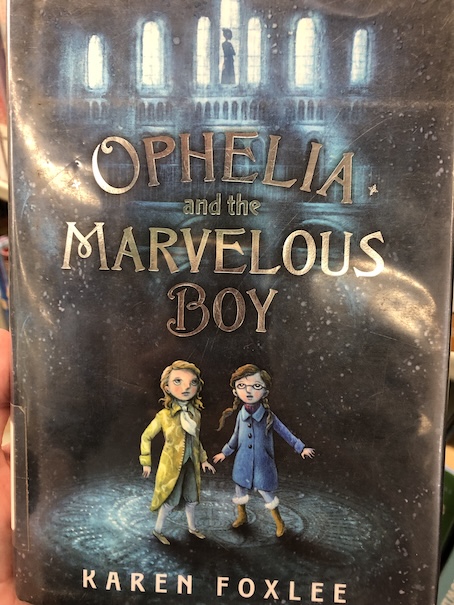
Ophelia and the Marvelous Boy by Karen Foxlee, 2014.

Ophelia and her older sister Alice are spending the Christmas season in a strange sister, where it constantly snows. Their mother died only about three months before, and they are still struggling with their grief. Their father is an expert on swords, and he has accepted a job helping to set up a special exhibit of swords at a very strange museum. He finds the work fascinating, and he thinks that maybe a temporary change of scene would be good for them all. Alice broods and buries herself in listening to sad music, and Ophelia wanders through the museum, exploring. That’s when Ophelia finds something that turns everything she thinks she knows on its head: she finds a strange boy in a locked room.

When Ophelia speaks to the boy through the keyhole of the room where he’s being held prisoner, he tells her an incredible story. He says that he has come from another land more than 300 years ago, chosen by a protectorate of wizards to deliver a magical sword to the one who will defeat the evil Snow Queen. The Snow Queen is the one who has imprisoned him, and she has taken the sword from him. He doesn’t know where it is now, but he needs Ophelia’s help to escape from the room where he is locked up and find it.

At first, Ophelia refuses to believe the boy’s story. It just sounds too fantastic, like something from the kind of books her mother used to write. Ophelia’s mind works differently. She likes science and things that she can easily classify. Stories about magic and fantasy creatures make her uneasy because she can’t explain them or classify them, like she can creatures from the normal animal kingdom. If her mother was alive, Ophelia could imagine her easily believing everything the boy says, but Ophelia absolutely refuses … at first. However, the boy is so sad and obviously in trouble that Ophelia finds herself trying to help him, even though she doesn’t believe his story.

She follows the boy’s instructions to find the key to the room where he is locked up, encountering magical creatures and the ghosts of girls who were murdered by the Snow Queen to give her power and keep her alive through the centuries. Confronted by these things directly, Ophelia is forced to accept that what the boy has told her is true. Even though she can’t fully explain it, Ophelia must accept that the boy hasn’t aged in 300 years because of a blessing that he received from a magical owl who ate one of his fingers, that the boy doesn’t have a name because the wizards have taken it from him so they can recall him from this world to the one he came from, and that they must find the magical sword before the magical Wintertide clock in the museum chimes on Christmas Eve. If they can’t find the sword before the Wintertide clock chimes, the Snow Queen will take over the world, and all will be death and sadness.

Along the way, Ophelia struggles with her feelings about her mother’s death, which are intertwined with her feelings about the unexplainable and fantastic. However, her mother isn’t completely gone, and in this magical, haunted museum, Ophelia begins to hear her mother’s voice, whispering advice and encouragement to her. Her father and Alice are both hiding from their sadness and the memory of Ophelia’s mother. Ophelia’s father has buried himself in his work, and Alice has become vain, moody, and self-absorbed. Ophelia realizes that they need to accept their sadness in order to heal and move on. Meanwhile, Ophelia also needs to confront her own self-doubts and skepticism to fully accept the role that she must play in this story.

As the clock ticks onward, Ophelia must rescue Alice from the clutches of the Snow Queen, who has marked her as her next victim. She must also convince her father of the need to find the magical sword and its importance before the marvelous boy fades away and all is lost.

My Reaction and Spoilers

This is a fascinating twist on the traditional fairy tale of The Snow Queen by Hans Christian Andersen. All through the story, as Ophelia is helping the mysterious boy, he tells her the story of how he was chosen to be the one to deliver the sword and the story of his journey to this place and his imprisonment. He doesn’t have all the answers for Ophelia. Although the wizards who sent him gave him some instructions, he doesn’t know everything that’s been happening or that will happen, but he knows that if he follows the wizards’ instructions and guides Ophelia as best he can, all will be well in the end.

Ophelia’s journey is also one of acceptance, learning to accept that there are things she doesn’t fully understand, learning to accept her mother’s death, and learning to accept her own roles and responsibilities in life. Although she doubts herself at first, as a small, asthmatic girl who still misses her mother, she is capable of more than she thinks, and moving forward with faith and hope will help her to make things right in the end. Her father and sister also learn to put aside their own grief and concerns to be there for Ophelia when she needs them, uniting them as a family.

There are some parts of the story that aren’t fully resolved at the end, which might leave room for Ophelia and the boy to meet again someday. We never learn the boy’s name, and we don’t know exactly where he’s going when the wizards call him home. Hopefully, he will be reunited with his own mother, although we don’t know how much time has passed in his world since he left over 300 years ago. Readers can speculate, and I prefer to think that this is a happy ending.

This is a dark fantasy with child deaths (the ghost girls Ophelia meets) and attempted child murder (Alice), but the darknesss helps to establish the true evil of the Snow Queen, who has been masquerading as an employee of the museum. The Snow Queen flatters Alice and gives her presents to win her trust, as she has done with other girls before her. Only Ophelia and the boy see her true nature until both Alice and the girls’ father see her about to attack Ophelia and understand that she is a real threat. Like all the best villains, the Snow Queen is irredeemably evil, and her defeat improves the lives of everyone. It’s the struggle to defeat evil that brings out the best in the other characters and helps them to resolve their earlier doubts and problems.

The museum is a magical place that opens the imaginations of readers. The boy explains that it used to be the palace of the city before the Snow Queen turned it into this bizarre museum. There are the obvious magical elements, but also, there are the strange exhibits that would delight real children to explore. Some of the exhibits are obviously fascinating ones, like the dinosaurs, swords, and dollhouses, but there are the inexplicable ones, like a room full of old telephones and broken toys. Real museums are well-organized, well-lit, and with age-appropriate educational activities provided, but in this strange place, readers can imagine anything lurking in the dark corners of the museum and surprises at every turn. It’s dark and scary but magical and wonderful at the same time, and readers will delight in exploring along with the characters!

Winterhouse

Winterhouse by Ben Guterson, 2018.

Eleven-year-old Elizabeth Somers lives with her aunt and uncle in a shabby house until her aunt and uncle leave on a trip over the Christmas holidays without her. They pack her luggage and leave her a note with a bus ticket. The note tells her to go to the hotel called Winterhouse and stay there until after the New Year, when she will receive a ticket to return home to them. Elizabeth doesn’t like living with her aunt and uncle, and she is upset to be abandoned by them over Christmas with only a little luggage and not much money. Her aunt and uncle don’t really like having her live with them, either. Elizabeth has lived with them since her parents died when she was four years old. She was there when her parents died, and although her memories are only vague, she has the feeling that the story her aunt told her about how they died isn’t quite right.

Her aunt and uncle are poor, and Elizabeth doesn’t even understand how they could afford to send her to a hotel for Christmas, much less go on a trip themselves. Her only clue is a conversation that she overheard between her aunt and uncle earlier, which made it sound like someone else was paying for both Elizabeth’s stay at Winterhouse and for them to go on a trip themselves. It also sounded like Elizabeth’s aunt and uncle didn’t even know who was paying for all this or why. They were just eager to take advantage of it. Even though Elizabeth doesn’t really understand the situation, she has no choice but to use the bus ticket and go to Winterhouse. Sometimes, Elizabeth gets strange feelings when something is about to happen, and she has another one of those strange feelings about going to Winterhouse. She has the sense that something important is about to happen.

Elizabeth is a lonely girl with no friends. She likes to read and solve puzzles, particularly word puzzles, and she likes to write lists of things in her notebook. (Each of the chapters in the book starts with a little word game, word ladders where one word is changed into another word, one letter at a time.) She has some books with her from her school library, and she plays little word games and works a crossword puzzle on the trip to Winterhouse. She chats a little with a woman next to her, and she notices that a couple dressed in black keep looking at her and whispering. The man comments that she looks like someone they know, but they don’t seem to like her. It makes Elizabeth uneasy.

When Elizabeth arrives at Winterhouse, the hotel is large, grand, and beautiful, all decorated for Christmas. It’s a snowy place in the mountains with a ski lift. The man and woman in black also get off the bus at Winterhouse. The man in black has a large crate with him that he says is full of books, although someone else notices that it’s shaped more like a coffin. The woman in black makes a cryptic comment about how this is the beginning, and she also addresses Elizabeth by her name, saying that she made it to Winterhouse and asks her if she’s glad.

The bellhop assures Elizabeth that she is expected at Winterhouse as a guest, although he is unable to tell her who paid for her visit there or why. The eccentric owner and proprietor of the hotel, Norbridge Falls, introduces himself to Elizabeth and escorts her to her room. Norbridge tells her about the upcoming Christmas celebration, the educational lectures about interesting topics, and movies shown in the theater at the hotel, and he invites her to enjoy all of the entertainment. There are also unusual objects on display around the hotel, including a pair of pants belonging to Shackleton and a chess set that was apparently used by Lewis and Clark, although Norbridge sometimes gets historical details mixed up. Elizabeth tries to ask Norbridge who paid for her to be at Winterhouse, but he can’t answer that question, either. When Norbridge gives her a special candy made and served at Winterhouse, Elizabeth has the strange sensation that she’s eaten this kind of candy before, although she can’t remember when.

The man and woman in black keep making trouble for the hotel staff. First, they complain about their room and the way the bellhops handle their large box of books. Then, they argue with a bellhop about not being allowed to enter the hotel’s library after hours. Elizabeth wonders why they would need to find a book so urgently when they supposedly brought so many with them.

At breakfast, Elizabeth meets a boy about her age, Freddy, who is also at Winterhouse alone. Freddy says that his parents always send him there alone for Christmas. He doesn’t mind it because he really likes Winterhouse. Elizabeth is pleased to discover that Freddie also likes word games and anagrams. Freddy says that Norbridge has recruited him to help him do some research for a special project, figuring out how to use the nut shells from the hotel’s candy kitchen as a useful feul source. He says that Norbridge gives him a different project to work on every year.

Elizabeth also makes friends with Ms. Leona Springer, the Winterhouse librarian. Although she is an older adult, Leona also likes reading good kids’ books and is familiar with Elizabeth’s favorites. The library is charmingly old-fashioned and still uses card catalogues instead of computer catalogues. While exploring the library, Elizabeth finds an old book, over 100 years old, with activities for children. Some of them are typical children’s activities, like how to plan a scavenger hunt, and others are more unusual, like how to make people think you’re from another country and how to tell a story even the mayor of your town would believe. Elizabeth is charmed and intrigued by this book, and even though it’s in the reference section and not available to check out, she smuggles it out of the library so she can read it more, whenever she wants.

Elizabeth enjoys all the winter activities at Winterhouse with Freddy, but she begins to notice some odd things about the Falls family. They have their secrets, and the activity book that Elizabeth smuggled out of the library helps to her understand that one of the family portraits contains a secret code. There is a connection between the author of that children’s book and the members of the Falls family, and this unassuming book may be what the man and woman in black are searching for at the hotel. As Elizabeth begins to unravel the mysterious secrets of the Falls family, she comes to understand some of the secrets of her own past and the real reason why she was summoned to this hotel.

This is the first book in a trilogy, where Elizabeth and Freddy continue to explore the mysteries and puzzles of Winterhouse!

My Reaction

I read this book because I heard that it was great for people looking for an atmospheric read for Christmas, and it’s true! The hotel is a magical place with all sorts of fun and amusing things to do for every taste. The hotel is beautiful with all kinds of good food and comfortable rooms and interesting things to see around every corner. I don’t think I’ve ever stayed in a hotel that had its own library, although I’ve also never stayed at an expensive resort or a ski resort. It almost seemed like a cruise ship in terms of the range of activities, like the educational lectures, concerts, movies, and swimming, but it’s also land-bound and snowy. During the Christmas holidays, Elizabeth and Freddy go swimming and sledding, and they spend time reading and working on their own projects. They use the children’s activity book to set up elaborate scavenger hunts for each other. The puzzles in the story are fun. I love word games, and I liked the codes and clues in the story. The scavenger hunt is something I would have wanted to do as a kid! Or maybe even right now. Not only would kids love to spend their winter vacation in such a charming place, left to their own devices to enjoy whatever they wanted, I think most adults would also love it!

The magic is in the story is also literal as well as atmospheric. The members of the Falls family have had magical abilities for generations, and Elizabeth learns the origins of their magic and the blessing/curse that has hung over them ever since. Everyone has the ability to use their powers for good or evil, and there is something that will hang over the Falls family until one of them, the right one, makes a definite choice. Elizabeth realizes that she has become a pawn in a very old game of good and evil, and she has choices of her own to make. I enjoy books that are both mystery and fantasy! Elizabeth gets answers to many of the mysteries in this book, but there are some things that are left open-ended for the next books in the series.

As someone who enjoys nostalgic children’s literature, I also like books that reference other books. Elizabeth likes to read, and she references various books throughout the story, both classic and modern, including Anne of Green Gables, Mary Poppins, The Adventures of Tom Sawyer, The Lion, the Witch, and the Wardrobe, The Westing Game, The Golden Compass, Escape from Mr. Lemoncello’s Library, Inkheart, and The Mysterious Benedict Society.

All-Of-A-Kind Family Hanukkah

All-Of-A-Kind Family Hanukkah by Emily Jenkins, illustrated by Paul O. Zelinsky, 2018.

This picture book was based on the All-Of-A-Kind Family series by Sydney Taylor, about a Jewish family in New York during the early 20th century.

It’s the day of the first night of Hanukkah in 1912, and the girls are excited about the celebration that evening. They’re looking forward to the latkes (potato pancakes) with applesauce and lighting the candles in the menorah. Gertie and her sister Sarah discuss what will happen and its significance for the miracle of the oil that burned for eight days and nights.

All of the sisters in this family of five girls have something to do to help get ready. Charlotte is six years old, and she is helping to peel potatoes. Sarah is eight years old, and she is grating potatoes. Henny, the ten-year-old, is chopping onions. Ella, who is twelve years old and helping with the mixing and frying, picks Gertie up to show her what they’re doing. However, Gertie is only four years old, and she isn’t allowed to help with anything. The girls’ mother thinks that she’s too young and likely to get hurt by something sharp or burned by the cooking oil, so she can’t even stay close to watch.

Gertie’s mother and sisters tell her that she should just go play or look at a book until everything is ready, but Gertie is offended because she wants to help, like everyone else. When she has a temper tantrum about it, her mother sends her to the room she shares with her sisters.

It sounds like everyone else is having fun as they get ready for the celebration, and Gertie, who is hiding under her bed, feels even more left out. It seems like nobody even misses her.

Then, Gertie’s father comes looking for her. He has something she can do to help: she can be the one to help light the menorah. At last, Gertie feels like she’s really part of the celebration!

My Reaction

I’m not Jewish and didn’t grow up reading the All-Of-A-Kind Family series. I became interested in the series later while researching vintage and nostalgic children’s books, and I think it’s charmingly old-fashioned. The original books in the series are chapter books, but I think this picture book does a great job of capturing the old-fashioned charm and family dynamics of the original books.

I was also the youngest child of my generation in my family when I was growing up, and I also know what it’s like to feel like everyone is older than you and allowed to do things you can’t and how nobody else seems to understand how it feels. One of Gertie’s sisters says that she’s lucky because all of the things they’re doing to make the latkes are chores, and Gertie doesn’t have to do the work they’re doing to enjoy the treat. Cutting onions certainly isn’t pleasant. However, the work isn’t really the point. What Gertie really wants is that feeling of inclusion, being a part of the family celebration, just like all of her sisters. When it seems like she can’t do anything to help, she feels shut out of something important.

When the other girls and their mother start singing while they work, I thought maybe the girls’ mother should have given her the task of choosing their work songs and leading them in the singing. I suppose she could also have found some other small chore for her, like fetching silverware or handing her sisters potatoes and onions as they chop them or wiping up messes. The mother just seems like she’s too busy to even think of anything Gertie could do. Fortunately, her father helps by finding something that she can do with everyone else, and that gives her the feeling of inclusion that she really wants.

Winter Is Coming

Winter Is Coming by Tony Johnston, Illustrated by Jim LaMarche, 2014.

This is a peaceful story about the changing of seasons. The story starts in September, when a girl who lives in the countryside begins to notice the changing of the seasons. It is the beginning of fall, but fall leads to winter

All through the autumn, the girl watches animals from her platform tree house. She notices changes in their behavior because of the changing seasons, and she makes notes and sketches about what she sees.

Animals are searching for food, fattening themselves up or storing away food for winter.

The animals she sees include a fox, bears, skunks, deer, woodpeckers, rabbits, a lynx, chipmunks, and geese.

As the book continues, winter comes. The animals stop coming to the girl’s observation point because they’ve either moved on or have started hibernating or have sought shelter for the winter. It starts snowing, and the girl goes home.

My Reaction

I thought this was a calm and educational story about the behavior of animals and changing seasons. The pictures in the book are beautiful, taking up full pages. The warm oranges and yellows of fall at the beginning of the book gradually shift more to blues and purples for winter as it gets darker and colder.

I also loved the way the girl sketched all of the animals she saw and made notes about their behavior. In the pictures, you can see parts of her sketches on her sketch pad as she draws. I also noticed that, in the very front of the book, there is a picture of the girl’s blank notebook and sketchpad, and the very last illustration in the book shows the pages of her notebooks filled with sketches of animals. I think the story does a good job of encouraging young readers to notice details in the world around them.

Although I’ve been calling the child a girl all the way through my review, and I think she’s a girl because of what she’s wearing, I did stop to think that the pictures do leave that a little ambiguous. The child’s clothing is a clue, but the child’s hairstyle could really be worn by anyone, which is might be intentional, so any young reader could identify with the main character.

Premeditated Myrtle

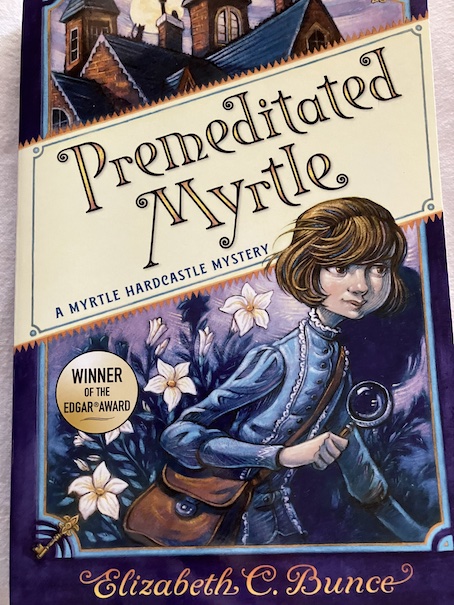
Premeditated Myrtle by Elizabeth C. Bunce, 2020.

Twelve-year-old Myrtle Hardcastle, living in 1890s England, has a precocious interest in forensic sciences. Her scientific investigations are based on her father’s law career and her deceased mother’s interest in medicine, although her father worries that she is morbid and that her interests are highly inappropriate for a girl her age. Her governess, Miss Judson, respects Myrtle’s interests and intelligence, although she does try to restrain her (mostly unsuccessfully) from overstepping the proprieties of their time.

One day, Myrtle comes to believe that something serious has befallen an elderly neighbor, based on the fact that she has not appeared and the gardener and his cat have not made their usual rounds. Miss Judson is concerned at first that Myrtle has alerted the police for no reason, but then, the neighbor his found dead in her bathtub. It appears that she drowned while taking a bath, which could be a simple accident. However, Myrtle suspects foul play. It appears that the neighbor died the night before, and she did not normally take baths during the night.

When Myrtle persuades the coroner to share his findings about their neighbor with her, he says that the neighbor didn’t drown; she apparently died of a heart attack. However, Myrtle still believes that that the neighbor was a victim of foul play. Myrtle knows that certain substances, such as digitalis (which is derived from foxglove plants), can bring on a fatal heart attack. Although Miss Judson takes Myrtle’s theories seriously, Myrtle’s father is still worried that Myrtle is becoming too morbid and isn’t behaving in a way that’s appropriate for a young girl.

The adults begin taking Myrtle’s theories more seriously when the coroner’s further investigations confirm that the neighbor was indeed poisoned with digitalis. The neighbor was mainly known for her love of gardening and her cultivating prize lilies. Since her death, everyone seems interested in learning whether or not she was successful in her attempts to cultivate one particularly rare and valuable lily. If she was successful, nobody seems able to find the plant, and someone has inexplicably destroyed her other lilies.

Everyone suspects the lady’s gardener because he has a criminal record. However, there are other suspects. Could it have been her niece, Priscilla, who has only recently arrived from America and who may not be who she claims to be? It certainly makes Myrtle nervous when the flirtatious Priscilla begins paying too much attention to her widowed father. Then, there is the lady’s nephew, Giles, who is frequently hanging around and smoking those nasty cigarillos. Either of them might have killed the lady to inherit her estate. The answers come a little too close to home for Myrtle’s comfort or safety.

My Reaction

I thought that the mystery was good. We have a set of possible suspects for Myrtle to investigate, and there is a twist with an additional suspect Myrtle initially didn’t think to even suspect but who is present on the scene the entire time. The suspects’ motives make sense, and there are points when all of them look equally guilty. There is one suspect who looks particularly guilty only for there to be logical explanations behind this person’s behavior and suspicious reputation.

I enjoyed Myrtle as a character, although I couldn’t help but notice that she’s also a trope. Myrtle is “not like other girls”, particularly not like other Victorian girls. This is both a good thing and a little cliche. She is shown with other Victorian girls her age, including the coroner’s daughter, who make fun of her for her clothes and weird interests and try to scare her by locking her in the morgue. Of course, Myrtle, not being like other girls, isn’t scared by that at all and uses this as an opportunity to further her investigation. Myrtle does eventually make friends with the coroner’s daughter, when they discover that they do share some interests and when the coroner’s daughter helps her to save a cat who has been poisoned. Myrtle is socially awkward because she has not had friends her own age before and her niche interests don’t appeal to everyone. Still, when she finally makes a friend and is invited on outings, she begins to see the appeal of friendship. Overall, I liked it, although I felt like the other Victorian girls were inserted partly to highlight why Myrtle is eccentric and not accepted by wider society for the very things that make her the heroine of this story. Except for the coroner’s daughter, they don’t really serve any other purpose in the story, although they do provide a way for Myrtle to snoop in a place where she doesn’t belong.

One of the hallmarks of the Victorian era was a rigid social structure, at least much more rigid than what we have in the 21st century. The book does mention that there are certain expectations for the behavior and future of young ladies like Myrtle, but even though her governess does try to get Myrtle to recognize that these social rules exist and that she has to pay some attention to them, it feels like these rules are considerably relaxed for Myrtle. The household that Myrtle lives in has apparently always been unconventional for Myrtle’s entire life because her mother was also an unconventional person. Her father sometimes worries about Myrtle’s future and how Myrtle will fit in with other people, finding friends and functioning in society, but at the same time, he also loves her and appreciates the qualities that make her so different from everyone else. She is a lot like her mother was, and she also helps to resolve a serious situation with her knowledge and abilities. Myrtle’s governess is also an unconventional person at heart, which is why she appreciates Myrtle’s abilities and indulges her interests as much as possible.

However, Myrtle isn’t entirely free from some old-fashioned feelings herself. Myrtle disdains “sensational novels“, a real-world sentiment that dates from before the Victorian era. In the Regency novel Northanger Abbey, Jane Austen refers to heroines in novels who disdain reading novels themselves in order to show their intellectual superiority, and she explains how ironic that is – they are essentially rejecting themselves as shallow fictional characters and disparaging their own readers for reading something fictional. I did smirk a little when Myrtle expressed that sentiment, although it does show that she is a product of her time, at least the highbrow intelligentsia portion of it. Myrtle is highbrow and raised to be part of the intelligentsia, which does tend to set a person apart from others who aren’t, no matter what time period they live in. In a way, I thought that Myrtle’s literary conceit was a nice touch because, otherwise, she would have seemed too much like a 21st century transplant in Victorian clothing. For Myrtle to be believable as a 19th century person, she has to have at least some of their habits, sentiments, and internal contradictions, even if she is an eccentric by the standards of most people of her time. For her to differ on certain ideas from most people of her time makes her an eccentric or a person “ahead of her time”, but for her to differ on everything would make her a time traveler.

There are also signs of a romance between Myrtle’s father and the governess. Each of them seems to have feelings for the other, but neither can quite bring themselves to say or do anything about it. The situation is complicated because there is an employer/employee relationship between them, and they know that a romantic relationship or marriage between them would be somewhat scandalous and have some social consequences. Within their unconventional household, the governess often functions in the role of the lady of the house, but everyone else treats her like the hired help because that is basically her official position. Myrtle would like to encourage a relationship between them and have her governess become her new mother, if her father remarries anyone. However, the situation is complicated, and she’s not exactly sure how to explain her feelings to her father. There are a couple of scenes where Myrtle and her father discuss the future and possible marriages for himself and the governess. Her father points out that, eventually, Myrtle will be too old to need a governess, and her governess will either need to take another job or get married to secure her own future. That means that change will be inevitable, and there is only limited amount of time for them all to consider what that will mean. Although I think that, in the real-life Victorian era, social pressures would likely be too much to allow this relationship to develop further, I’m hoping for a happy ending for them as this series continues!

The Mystery of Black Hollow Lane

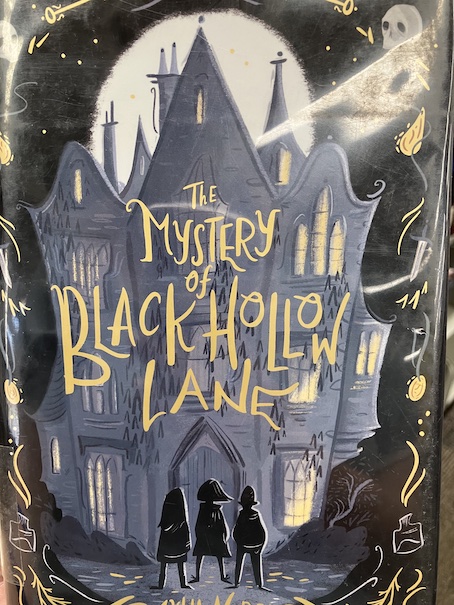
The Mystery of Black Hollow Lane by Julia Nobel, 2019.

Emmy’s mother is a child psychologist and so-called “parenting guru.” She writes books of advice for people about raising children, and she spends so much time on her work that she has little time for her own daughter. She arranges for Emmy to attend a series of high-ranking private schools, switching her around any time the school’s ranking changes for the worse. She doesn’t pay much attention to what Emmy does on her own while she’s working, spending her evenings, weekends, and holidays making frozen meals and watching tv. Emmy has switched schools too much to have any lasting friendships, and her mother isn’t interested in her favorite extracurricular activity, soccer. For her mother, Emmy mainly represents one of her credentials as a parenting guru. When Emmy does well and appears happy and supportive of her single mother’s work, it looks good for the media. Her mother insists that she do well and look happy, not paying much attention to how Emmy actually feels or what she really wants.

Emmy doesn’t have a father because her father disappeared when she was three years old. She has no idea what happened to him, and her mother refuses to talk about him. Then, one day, she receives a letter telling her to take care of her father’s relics, if she finds them. Emmy knows that she can’t ask her mother about them because her mother got rid of almost everything that reminds her of Emmy’s father. However, a search of the attic reveals a hidden box of strange medals with a note from her father. The note apologizes to Emmy’s mother and asks Emmy to keep the relics safe. Who could have written that letter to Emmy, alerting her to their existence?

Then, Emmy’s mother announces something that changes everything for Emmy. She is going to be working on a reality tv show about parenting, counseling families with problems. She is excited and talks about how important it is to be helping people. However, that means that she’s going to be traveling, and because she can’t be home to look after Emmy (as much as she usually does), that means that Emmy will be attending boarding school. The boarding school that Emmy’s mother has chosen for her is in England. Emmy is stunned and worried about being sent away to boarding school, especially one in another country, but her feelings begin to change when her mother lets it slip that she met Emmy’s father in England. Her father was English, not American. When Emmy realizes that she will be going to the place her father came from, she feels like she might experience some of the connection to her father that she has craved. Her mother says that her father has no living relatives, but Emmy still feels like she might sense a piece of her father by going to England.

When she arrives at the school, Emmy still has mixed feelings about it. Her house mother, Madame Boyd, warns her that the work load will be difficult for her, especially because she’s transferring from another country. She’s been taught mostly American history and not British history, and she hasn’t learned any Latin or Greek, which are not typical parts of an American education but are classics at British boarding schools. Emmy worries about whether or not she’ll be able to catch up to the other students, and she’s devastated when her mother tells her not to sign up for soccer because she really wants her to focus on her studies. Soccer was the one thing Emmy had been really looking forward to doing, and she thought it would be a great way to make some friends. Her roommate immediately hates her and is nasty to her because she had been hoping to get a room all to herself this year.

Mrs. Boyd has Emmy sign up for the Latin society to help her catch up in Latin, but it turns out that the Latin society is a strange and exclusive club. The first time that Emmy hears other students talking about it, she learns that the members have a reputation for dangerous stunts, for which they never seem to get into trouble but which often end in people getting hurt. Other students can’t understand what’s going on with the club or how the members are so privileged. Even getting into their meeting place is mysterious. It’s kind of a test for new members to figure out how to use the secret entrance. However, there are no other girls in the club. Traditionally, it only admits boys, even though the school is co-educational. The boys aren’t happy about having Emmy there, and both the Latin teacher and the humanities teacher try to discourage Emmy from staying in the society. Emmy remains anyway because it gives her a convenient study hall, away from her mean-spirited roommate.

Emmy soon learns that other students at the school have home lives that aren’t too different from her own. Some of them have absent fathers, and others are neglected by their parents because they’re busy with careers and/or travel. Even Emmy’s nasty roommate feels like her parents don’t really care about her or notice what’s going on in her life. Emmy makes friends with Mrs. Boyd’s daughter Lola, who is also a student at the school, and a boy named Jack. Lola is on the school’s soccer (football in England) team, and Emmy joins the team against her mother’s wishes when there’s an opening. Since her mother is in a different country, Emmy figures that what her mother doesn’t know won’t hurt her.

A class assignment about the dissolution of the monasteries in England under Henry VIII brings to light some disturbing aspects of the school and its history. Emmy is aware that the school was once an abbey and cathedral, and it shows in the architecture of the buildings. When she, Lola, and Jack decide to do some research about the school’s history for their class project, Jack becomes very nervous, and the girls notice that he tries to steer them away from reading certain books or looking into particular topics. Lola confronts Jack about this, and Jack admits that he knows something that the girls don’t know: the school is home to a dangerous secret society made up of students, faculty, and alumni.

The origins of the mysterious Order of Black Hollow Lane extend back to the dissolution of the abbey that was once on this site and Catholic dissidents. However, it has taken larger dimensions and more sinister purposes since then. Jack believes that they are involved in a number of illegal dealings and that people who pose a threat to the Order suffer mysterious “accidents” that aren’t really accidents. Jack knows about the Order because his father and older brothers are part of it. He was supposed to be part of the Order himself, but he had bad experiences with them when he first came to the school, and the things that his father and brothers talk about among themselves frighten him. He ended up rejecting membership, something that has caused tension between him and his family and the current members of the Order. He doesn’t think his father and brothers mean him any harm, but he knows that they’re involved with shady dealings and suspicious people. The Latin society at school is often used as a recruiting ground for the Order, which is part of the reason for some of their noticeably dangerous stunts. The “stunts” are initiation/hazing for potential members or ways of punishing dissenters in their ranks. This secret dark side of the Latin society is also part of the reason why they don’t want Emmy there. Jack advises both Emmy and Lola not to let on that they know the Order exists and not to look into their activities any further because its members are prepared to do dangerous things to keep their secrets.

However, forgetting about the Order is not an option for Emmy. As she receives other messages about her father and gradually begins to put together pieces of school history and her father’s history, Emmy comes to realize that her father was once a student at the same school and that he was also once part of the Order. She comes to believe that the Order is the reason why her father disappeared years ago. Did they kill him to protect their secrets, or is he in hiding from them somewhere? When Emmy’s room is ransacked, she realizes that someone is after something she has. Years ago, her father took something that belonged to the society, and now, they want it back. Someone is willing to do anything to get it.

My Reaction (and some spoilers)

I really enjoyed this mystery! In a way, this book reminds me of Harry Potter without the magic spells. The only magic is the magic of learning in an environment that inspires the imagination! Boarding school stories often focus on friends and relationships, which are important and a major part of this book, but this one also makes use of real world history, literary references, and classical studies. It fits very well with the popular genre/aesthetic of Dark Academia. We get to see details of what the students are studying, and some of the lessons apply directly to the mystery in the story. As with the Harry Potter series, the adults who truly care about the students try to steer the children away from danger, while the same time, providing them with the knowledge and opportunities to get closer to the source of that danger. It’s a contradiction, but it helps move the action forward and gives the kids the answers they need to some important questions.

Books with secret societies and children with mysterious pasts are always compelling. In this book, we learn both the origins and purpose of this particular secret society. The society had its origins in the dissolution of the monasteries and religious dissent, but its purpose now is to maneuver its members into positions of power and material wealth. Everything it does is with that aim. It commands absolute loyalty from its members, and it ruthlessly punishes anyone who opposes it. They are loyal to each other, but only to the point when someone interferes with their money and power-oriented goals. Then, they’re prepared to throw each other under a bus. They are even prepared to murder former friends. Nobody dies during this book, but Emmy comes close to being one of their victims. They are not troubled by the idea of either injuring or killing children. They nurture some students as future members, but that’s with the idea of using them as resources to promote their goals and profits, not really because they care about people.

For much of the book, the main characters don’t know who to trust, besides each other. Because of Jack’s family’s connection to the Order, they know not to trust his brothers and other members of the Latin society or the Latin teacher. However, they can’t be entirely sure which other adults are involved. The kids are left to their own devices when learning about the Order and the truth behind Emmy’s father’s disappearance. Emmy is driven by her need to learn more about her father and the reasons why he disappeared or left when she was so young, but she and her friends lose the option to stop when the Order realizes who her father is and that she might possess something that they desperately want. Emmy’s life is in real danger from them, and all of the characters are aware of it.

There are themes in the story about relationship between parents and children. Most of the children at the boarding school seem to have difficult relationships with one or both parents, and there are kids whose parents are divorced or separated. Some children feel like their parents are out of touch with things that are happening in their daily lives, and others actually clash with their parents or feel like they’re being neglected or exploited by parents. Jack’s relationship with his father and brothers is particularly troubled because he knows what they’re involved in and has rejected the opportunity to join the society with them. His father and brothers are angry and bitter with him over his rejection. Jack doesn’t think that they mean him any direct harm, but they are cold to him, and former friends bully him over his decision without his brothers doing anything to stop it. Arguably, Madame Boyd is the most involved parent in the book because her daughter, Lola, attends the boarding school where she teaches. The kids don’t tell Madame Boyd everything they’re doing, but they do confide some things in her and appeal to her for answers and help.

In the beginning, Emmy doubts how much her mother really cares about her because she’s so wrapped up in her career, and she tends to use Emmy as a kind of credential and showpiece of her parenting skills. Emmy feels like most of her mother’s interest in her is related to promoting her own career. However, her mother does call her regularly throughout the book to see how she’s doing, and through their separation, her mother comes to realize how much she misses just having Emmy around. Emmy’s mother cares about her. Her career ambitions and desire to help other people with their children sometimes gets in the way of really spending quality time with Emmy, but after sending Emmy to boarding school, she realizes how she needs to appreciate the time that she and Emmy spend together more. Emmy also stands up for herself and what she wants, telling her mother that she wants to keep attending the boarding school with her friends and playing soccer, and her mother listens to her and agrees that what’s best for her is what enriches her life and learning the most. Her mother isn’t happy that Emmy signed up for soccer without telling her, but she admits that it doesn’t seem to have interfered with her schoolwork, so she agrees that Emmy can keep playing.

Many questions about the secret society are answered before the end of the book, but the story is a little open-ended, too. Emmy learns what the society is and what it does and what her father’s involvement with it was. She knows that her father is still alive and that he does care about her, although she doesn’t know exactly where he is. There is a sequel to the book called The Secret of White Stone Gate.

The Halloween Moon

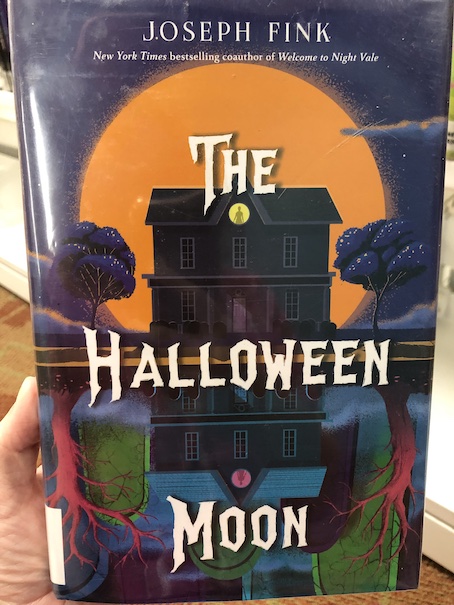
The Halloween Moon by Joseph Fink, 2021.

The Bennington Museum of the Rare is a private museum in James Bennington’s house, assembled with his own money and viewed only by a few, select guests. James Bennington is obsessed with his collection and guards his privacy very carefully because everything in his collection is stolen. Then, one day in early October, he unexpectedly gets a knock on his door. That shouldn’t be possible because Bennington has a security team that keeps people away. Bennington tries to call the head of his security team to deal with it, but for some reason, he can’t reach his security. Worse still, when Bennington doesn’t answer the door, the man who knocked at the door lets himself in. He has children with him, who are wearing ragged Halloween costumes. The man tells Bennington that he just needs one thing from Bennington’s collection. He is accompanied by a creepy woman who Bennington feels isn’t really human, just something that looks human. To Bennington’s surprise, the woman selects an item from Bennington’s collection that has hardly any value at all. Then, they disappear. Bennington thinks that he’s safe, but then, he hears the sirens of police approaching his house.

However, this story isn’t really about Bennington. It’s about Esther. Esther Gold loves Halloween and scary movies and making costumes. She loves all of the rituals of Halloween and delights in scary stories. She appreciates scary stories because she knows that there are scary things in life, but the scariness of a horror movie or a ghost story is fine because she knows that the scary things in them aren’t real. However, this particular Halloween, the scary stories become a little too real.

Esther is Jewish, the only Jewish child at her school. Most of the time, it doesn’t matter, although her middle school years had an awkward start to them because of it. Because the local school district isn’t in the habit of thinking of Jewish holidays, they accidentally set the very first day of school on Yom Kippur, and Esther misses it because she is with her family at their synagogue in another town. When she shows up for the second day of school, everyone else has already had their orientation and knows where they are and what they’re doing. It’s awkward for Esther, starting one day late, giving her an unsettled feeling. Now, nearing the end of her time in middle school and with all of the awkwardness and unknowns of high school ahead of her, Esther is feeling that same sort of unsettled feeling.

Because 13-year-old Esther has had her Bat Mitzvah, her parents tell her that she is an adult now, and she’s too old to go trick-or-treating this year, but she is determined to ignore that. She loves Halloween too much. Her parents are firm with her that she’s getting too old, but she talks her best friend, Agustin, into going trick-or-treating with her one last time, using the excuse that they’re going to the movies with his mom instead. Agustin isn’t that excited about Halloween, but he agrees to go with her to help her out and because his mom has been too busy to do much with him lately, something that he finds hurtful.

Although Esther is determined to make this Halloween special, as special as Halloween always is for her, she can’t help but notice that things are changing. Her mother talks to her about how growing up is scary because change can be scary, but she tries to tell her that changes can be good, too. Esther only half listens, trying to hold onto her special feelings about Halloween for as long as she can. Still, she can’t help but notice that fewer people in her grade at school are dressing up for Halloween, and even her feelings toward her best friend are changing.

However, her odd feelings this particular Halloween aren’t just about growing up and the awkwardness of school relationships. She begins to notice other odd things happening in the neighborhood that give her a creepy feeling. First, there are the children in old, ragged Halloween costumes who start appearing the day before Halloween. Then, there are the ice cream trucks that advertise pumpkins and apples instead of ice cream. During the costume contest at her school, Esther notices a strange woman in the background who seems to be floating. As she and Agustin walk home from school, her next door neighbor, Mr. Nathaniel, who has always given her a creepy feeling, warns her and Augustine that there’s going to be a Halloween moon tonight, so they should be careful. He strangely adds something about how “she’ll be out tonight.” Esther realizes that Mr. Nathaniel is partly right. This particular Halloween is going to be a Halloween with a full moon, which doesn’t happen very often. Esther takes that as a sign that she really needs to go trick-or-treating and enjoy this special full moon Halloween.

As she and Agustin make their rounds trick-or-treating, the strangeness of the evening gets stranger. People who usually hand out candy aren’t answering their doors, and it seems like there are fewer kids on the streets. At first, Agustin thinks that maybe fewer people are excited about Halloween this year or maybe they’re just trick-or-treating at the wrong time to catch people, or something like that. However, they soon learn that it’s much more serious. Young children, like Esther’s little sister, have vanished. When they find adults, they’re either asleep and can’t be woken or insist that they’re too tired and that they are going to bed. The kids can’t seem to get through to them that things are strange. Something is terribly wrong, and the big, orange moon hanging in the sky never moves. Time is frozen, and only Esther, Agustin, and Sasha (who bullies Esther at school) can see it. Sinister ice cream trucks with apples and pumpkins that become weapons patrol the neighborhood, trying to hunt them down. With the help of the only adult in the neighborhood who has managed to stay awake, they must find out what is happening or be stuck in this truly frightening Halloween night forever.

Recommended reading ages from Amazon: Approx. 10 to 13 years old, grade levels about 5 or 6.

My Reaction

Halloween and Change

As an adult who has always loved Halloween, I really enjoyed this book! I can understand Esther’s feelings about friends and family who don’t understand her attachment to the holiday and the pressure she is under to act more grown-up, which means either changing how she celebrates Halloween and/or giving up her Halloween celebrations.

I’m in my 40s, and I’ve never given up the holiday, although the ways that I’ve celebrated have changed over the years. My birthday falls shortly before Halloween, so I was one of those kids who used to have Halloween birthday parties, and I continued that tradition even into my adult years. They’re not the same birthday parties I used to have as a kid, though. It’s been decades since I had a party where people did Halloween crafts. Halloween movies generally go over well, even with adults, and even adults can enjoy a good costume and the opportunity to show off their creative side. There are usually public events of various kinds around Halloween, like haunted tours, and public haunted houses or corn mazes. I know which restaurants in my town are historic/haunted. (There’s one in particular that’s both.) Since my friends also like games, there are options there that capture the Halloween spirit. Even during the covid pandemic, I had my own Halloween traditions that I was comfortable doing on my own, from reading my favorite books to watching my favorite shows to making my traditional pumpkin cookies. There is also the somber remembrance that comes with this holiday, which has its own kind of magic and takes on greater meaning with maturity.

I noticed, during the story, that Esther’s parents didn’t really offer many other suggestions to Esther to help her find other ways to celebrate her favorite holiday, probably because they were never into the holiday themselves and haven’t given much thought to it. I often experienced the feeling that I wanted to offer suggestions to Esther myself, although I couldn’t (because, you know, she’s a character in a book). There are tons of YouTube videos made by adults about how they celebrate Halloween and capture nostalgic autumn feelings. Being an adult doesn’t mean not being able to have some fun or appreciation for a fun holiday. It’s not so much a matter of giving up on the things you loved when you were young so much as learning to appreciate different sides of them and celebrate them in different ways.

I wished that Esther’s parents had explained that more and helped prepare her for some new experiences to appreciate. In the context of the story, Esther has to come to many realizations by herself, but in real life situations, I can think of many different things the parents could have done to show her that trick-or-treating isn’t the only way to celebrate her favorite holiday and that it can be fun and exciting to do different things every year, like taking her and her friends to some public Halloween celebrations and haunted houses or escape rooms, encouraging them to put up some amazing decorations or run their own haunted house out of their garage for the younger neighborhood kids, or suggesting that they have a Halloween party with some of their classmates or a marathon of Esther’s favorite horror movies. I was honestly surprised that no one ever suggested to Esther that she monetize her costume-making hobby. After all, she has years of experience making some really elaborate costumes and winning costume contests, and she knows adults who are engaged in creative businesses. If she can’t possibly make all of her ideas for herself, she could continue to exercise her creativity and make them for other people. There are sites like Etsy, where she could sell her handiwork, and she could probably make a fascinating YouTube channel with costume-making tips. That would be a good way to perpetuate something that she loves about Halloween while also expanding on it and taking it in a new direction, and it could even help her to connect with other people who share her interests, even if her friends and classmates don’t. It’s just another of one of the many possibilities that exist but which Esther hasn’t fully considered, and these things could ease the way for the changes happening in Esther’s life. Exploring different options and new ways to have fun would have made the bigger change of growing up more exciting and something to look forward to instead of dwelling forlornly on the parts that she’s getting too old to do and wanting to hold on to that. This could be a good book for sparking discussions among readers about the various ways that different people celebrate the same holiday and how old traditions can be combined with new interests.

There are many different ways to experience the same events or similar feelings in life, and each of them has their own time and mood. Esther’s issue at the beginning of the story is that she feels compelled to celebrate her favorite holiday in exactly the same way every year, without change. She feels like she’s found her perfect way of celebrating, and she wants things to always stay the same and for it all to feel the same. However, living and growing mean that feelings change. She eventually realizes her need for growth and change in the story and becomes open to new experiences. Even nostalgic adults who still love Halloween don’t experience it in quite the same way as they used to or even in exactly the same way every year, even if they do continue watching some of their same nostalgic movies.

Relationships

Part of the story that focuses on the changes that Esther experiences growing up focus on her relationships with other people. She notices that her feelings about Agustin are changing and that she’s starting to notice him more as a boy than just a friend. She is also becoming more aware of Agustin’s complicated relationship with his mother. He loves his mother and understands that her work is important to them both, yet he feels hurt that she spends more time on her work than with him. Sasha is a bully from school who even uses Jewish stereotypes in her bullying of Esther, and there are some insights on the nature of bullying in the book.

From the beginning, Esther sees that it’s not so much that Sasha actually hates Jewish people but that she sees stereotypes as convenient, pre-made weapons to use against Esther in particular. Sasha can see that bullying is a constant in school, whether you’re on the giving or receiving end, and her remedy for that is to make herself into one of the bullies so that she can be one of the predators instead of the prey. Initially, she seems to see predator and prey as the only two options, like there are no others and no middle ground. She fears being a target herself so much that she makes it a point to dish out aggression to other people. It doesn’t really make Sasha happy to act like that, and it’s not winning her friends, but now that she’s started, she feels like she can’t stop.

The kids are getting old enough that they’re starting to get some insights into themselves and other people, but they don’t yet know how to handle those parts of life and themselves that they don’t like or the changes that are coming for them all. Through their shared experiences in the story, both Esther and Sasha come to a better understanding of themselves and their relationship, and things improve between them because of it. Sasha also comes to see the benefits of taking out her anger on the people who are the cause of her problems instead of innocent bystanders, something which helps her cope with her feelings in a constructive way instead of creating new enemies or driving away potential friends. There are times for a show of strength, but not against her own allies, and Sasha begins to understand that not everyone is against her.

The ways that stereotypes can harm others or be weaponized against groups of people are also present in the story when they bring up the topic of superstitions about black cats. Esther’s mother points out to her that black cats are just cats, only different because of their color, and that it isn’t fair that they’ve been harmed and feared because of old stories about them. It’s not too different from the old stereotypes against groups of people, including Jewish people, like Esther and her mother. I thought it was a good comparison to make.

Esther’s relationship with Agustin also changes during the story, evolving from friendship into a boyfriend/girlfriend relationship. In a way, it feels a little stereotypical that kids in stories realize some of the benefits of growing up when they discover kissing, but there are reasons why stereotypes like this endure in children’s literature. It is a natural part of growing up. I thought Esther’s relationship with Agustin also felt pleasantly natural rather than forced. The story created some hints and potential for the match between them even before the adventure started, so the change between them didn’t feel too abrupt. It’s also in keeping with Agustin’s love of seeing what comes next. When he and Esther talk about change and Halloween and adult parties, Agustin makes it clear that he likes experiencing new things and seeing the next thing coming in life. That suggests that he also enjoys relationships that progress rather than wanting to cling to the same old “just friends” relationship between the two of them.

What made it better for me was that both Agustin and Esther become more mature in the way they view their relationships with other people, not just each other. Esther comes to accept that change means accepting age and death, and that means that she will eventually have to face losing her beloved grandmother, who is already showing signs of dementia. It’s a scary thought that she’s been trying to avoid thinking about, but her solution is to visit with her grandmother regularly and to make the most of the time they have left together. Similarly, Agustin has been troubled by how much his mother works and how she doesn’t seem to have much time for him these days. He comes to the realization that, if he helps his mother in her work, they can work together and also have more free time to do fun things together. I thought that showing how their relationships with their elders have changed was a good way of showing that the author is giving the kids a generally more mature outlook on life and not just hormones.
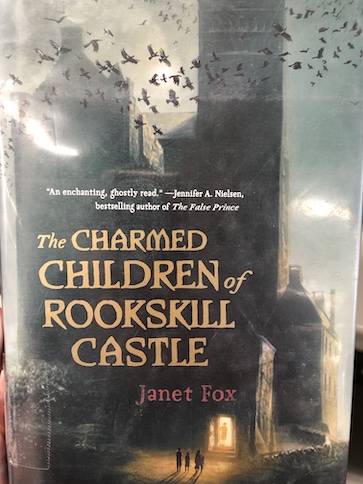
The Charmed Children of Rookskill Castle

The Charmed Children of Rookskill Castle by Janet Fox, 2016.

In 1940, in London, the coming of the Blitz during World War II means that children must be sent away to escape the bombings. Kat Bateson and her siblings are told that they will be sent to Rookskill Castle.

Rob is excited about going to a castle because it might be haunted and they might learn all kinds of Medieval fighting skills, like fencing and archery. Kat says that the castle is now called Rookskill Castle Children’s Academy, so they’ll probably just be having standard lessons. Rob thinks that she’s being stodgy and boring. Their little sister, Amelie, thinks that ghosts sound exciting, but 12-year-old Kat is sure that there won’t be ghosts. The castle is owned by the children’s distant relatives, and Kat is more worried about practical things, like their father’s war work with MI-6 (he is a spy, although they are not supposed to talk about it), how she will fit in with other children at school, and packing warm clothes for Scotland.

Before the children leave for Scotland, Great Aunt Margaret gives her something for protection – her chatelaine. The chatelaine is a family heirloom that holds a pen, scissors, and thimble attached by chains to a ring. Great Aunt Margaret says that it’s magical, and she warns Kat to be careful with magic because magic always comes at a price. Kat doesn’t really believe in magic, like her younger siblings do. She is practical and enjoys numbers, puzzles, and the clockwork skills that her father has been teaching her. Still, she accepts the chatelaine from her aunt. Her aunt tells her that the pen will write by itself, the scissors will cut anything, and the thimble has the power to capture souls.

Kat and her siblings make the trip to Scotland along with Peter, the American son of people their mother works with. The Bateson children like Peter, and they become friends. However, when they reach Scotland, the station master warns them away from Rookskill Castle, talking about strange stories about the place and other children who have gone there and haven’t been seen since. The children are spooked by what he says, but they have no choice but to go with the man from the castle who comes to pick them up.

When they arrive at Rookskill Castle, they all find the place creepy. The boys find the lady who runs the castle school, Eleanor, to be pretty and charming, but the girls find her creepy. Kat thinks that there is something wrong with her, although she’s not sure what. Eleanor also wears a chatelaine, although Kat doesn’t think hers is as good as the one Aunt Margaret gave her. Aunt Margaret’s chatelaine holds practical items, but Eleanor’s chatelaine holds strange-looking charms with no practical use. Kat doesn’t know what the point of them is, but she prefers Aunt Margaret’s chatelaine.

The children are told that they will share rooms – Peter and Robby together and Kat and Amelie together – and that they must wear school uniforms, which is typical of a boarding school. However, they are also told that they will be locked in their rooms at night, which sounds alarming, and that if they hear any strange noises, they should ignore them because old castles make odd sounds. They are not allowed to wander the grounds and explore.

The children and the other students at the school soon begin to see and hear strange things around the castle. They see other, mysterious children, who are not students but who may be ghosts. The boys hear strange noises coming from a secret room that Kat thinks sound like a radio. Kat thinks that the radio sounds might indicate that there is a German spy at the school, someone who is communicating with someone outside in secret. That would make sense for wartime Britain, but it can’t explain the other, frightening things that are happening at the castle.

There is something wrong with the teachers and the cook at the school. Their memories are sometimes muddled, and they seem to be easily confused about certain things. One of their teachers keeps talking about special artifacts with magical powers that could decide the course of the war, including a magical chatelaine once owned by Vlad the Impaler.

The longer they’re at the school, the more everyone seems to be affected by the place. Kat becomes certain that the students’ cocoa is drugged every night, and Lady Eleanor isn’t what she appears to be. Really none of the adults in the castle is quite what they appear to be, but Lady Eleanor is particularly sinister. In a series of flashbacks, it is revealed that she has led an unnaturally long life because of a magical pact she made centuries ago. In order to gain the power she craves, she needs the souls of children. Logical Kat needs to grasp the idea that there is magic and take possession of her own magical potential to save herself and the others in a terrifying showdown on Halloween night.

My Reaction

I really enjoyed the combination of magic and historical fiction in this story! I’ve read other books that combine the real-life experiences of WWII child evacuees with magic and fantasy. Many people would remember that the children in The Lion, the Witch, and the Wardrobe were child evacuees, but there are other books with similar themes, like Stonestruck by Helen Cresswell. There are several things that make this book different from others of its type, and I love that this book fits well with the Dark Academia aesthetic that’s been popular during the last few years.

One thing that appears in this story that I haven’t seen in similar ones is the use of mathematics and engineering skills alongside magic. Kat’s talent for mathematics and puzzles have practical uses during their adventure, and so does her budding talent for clockwork and machinery. There is both real machinery in the form of code machines and magical machinery in the story, and Amelie comments on the similarity between magic and the incredible results produced by Kat’s mathematics and by machines. I like the juxtaposition of real skills needed for invention and creation alongside the magic.

There is also a double threat in the book – the magical one and the more standard wartime threat of spies. The book’s premise of Nazis being interested in supernatural artifacts also has some basis in history. Movies like Indiana Jones and the Raiders of the Lost Ark are actually correct that there was an element of superstition in Nazism, and Nazis did attempt to use folklore and antiquities to create or build a connection to the past and to powerful figures. (There are many videos and documentaries on YouTube that offer more details about this. I recommend the ones from National Georgraphic, the Smithsonian Channel, and various universities as being the most authoritative and reliable.) The Nazi concept of history was really more of a fan fiction about their imagined past glories rather than sound and real history, and it was meant to serve as an inspiration for the empire they wanted to create. The book was correct that the darkness of war brings out magic, after a fashion. Even Allied countries, like Britain, saw a rise in spiritualism because of the war as people tried to connect to the spirits of lost loved ones, and this was also the time when Wicca began evolving into a religious movement. In fact, the founders of Wicca in Britain attempted their own magical ritual in the New Forest to ward off the Nazis. (The incident is recounted in this documentary about the life of the founder of Wicca by Professor Ronald Hutton of the University of Bristol.) In times of chaos, people are prepared to try anything and everything they can to protect what’s important, and that can include magic. The real life Wiccan rituals were not like the magic in this book, but I found it interesting that the fantasy of this story built on some real-life wartime attitudes about the supernatural.

I like books that include interesting and unusual historical details. Although this is a fantasy story, the experiences of the child evacuees do resemble the experiences of real-life evacuees. I enjoyed reading about their train journey from London to Scotland and the black-out curtains that even the trains have. Many books about child evacuees have them sent to live in private homes with people they don’t know, but in real life, there were some evacuees who were sent to boarding schools instead.

The use of a magical chatelaine is a charming touch that also shapes the nature of the story. A chaletaine is an unusual piece of jewelry that isn’t commonly worn anymore, which makes it different from stories that make use of charmed necklaces and rings. A chatelaine is a belt hook with items joined to it by chains. The items can be practical items, like the ones on Kat’s chatelaine, or charms, like the ones on Eleanor’s. Each of the items on the chatelaines in the story has a purpose.

There are also themes about power in the story. Eleanor craves power. When she was younger, before she began living this unnatural life, she craved love, but she was abused and neglected. She was powerless and fearful of the people who abused her, and her quest for power is to make herself invulnerable to that type of abuse again. However, in the process, she has sacrificed her humanity and placed herself in the position of being used by someone much more powerful. Readers and the characters can feel sorry for her because of her past life experiences, but she is beyond the point where they could save her from herself, the choices she’s made, the things she’s done to other people, and the evil force that has used her. The book is a little open-ended, with the villain behind the villain still lurking around at the end with a mission of his own to accomplish, and this story has a sequel, The Artifact Hunters.

Design a site like this with WordPress.com
Get started